
The Robotic Arm Simulator is a hands‑on VR training course that teaches your team how to operate, program, and troubleshoot industrial robotic arms without putting a real robot, materials or people at risk.
Your people learn inside an immersive virtual environment that behaves like a physical robot, so they arrive at the real arm already knowing the pendant, the modes and the safe sequence.

“When I went back, I’d already absorbed so much, unbeknownst to myself, so that when I tried the training content a second time, I was pacing through it much faster.”Peter Davitt, CEO, FIT
This VR robotic arm course works for individual learners, teachers, and robotics companies.
Why manufacturers buy this course
- No crashed robots or damaged tooling – mistakes happen in VR, not on your expensive arm. Perfect programs before going live.
- No robot stopped – train in a headset while your real robot keeps producing.
- No physical risk – practise emergency stops and collision recovery safely in VR.
- No consumables or test parts – practise endless cycles without wasting a single component.
- No prior knowledge required – works for any educational background. Builds practical, transferable skills from day one.
What your team will learn
By the end of the course, your operators and technicians will be able to:
- Understand industrial robots – joints (points of articulation), teach pendant controls, operating modes, programming automated sequences, and safety basics.
- Practise in VR, then move to real robots – rehearse each operation virtually before running it on a physical arm.
- Troubleshoot like a pro – spot and fix common robot issues inside VR, building real problem‑solving speed for the factory floor.
Course Aims & Objectives
Your team learns the core principles: how robot arms move, how to use a teach pendant, different operation modes, writing and running automated sequences, and safe working practices.
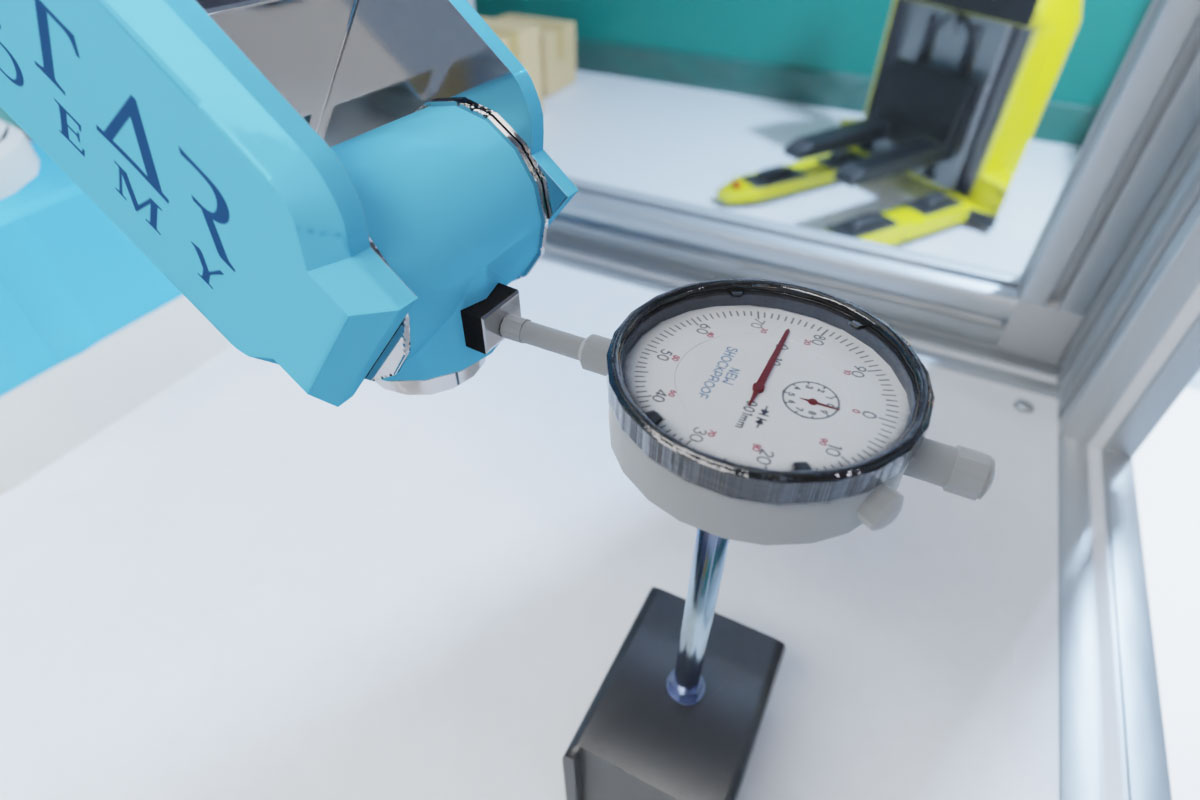
They interact with virtual robotic arms in realistic factory scenarios. They make mistakes, learn from them and try again – all in a safe, zero‑risk environment.
They reach the physical arm already familiar with the pendant, the operating modes and the safe sequence.
The simulation throws real‑world challenges at them. They learn to think fast, diagnose issues, and recover operations – skills that keep your line moving.
They become comfortable with virtual reality as a training tool, making future VR courses even faster to adopt.