
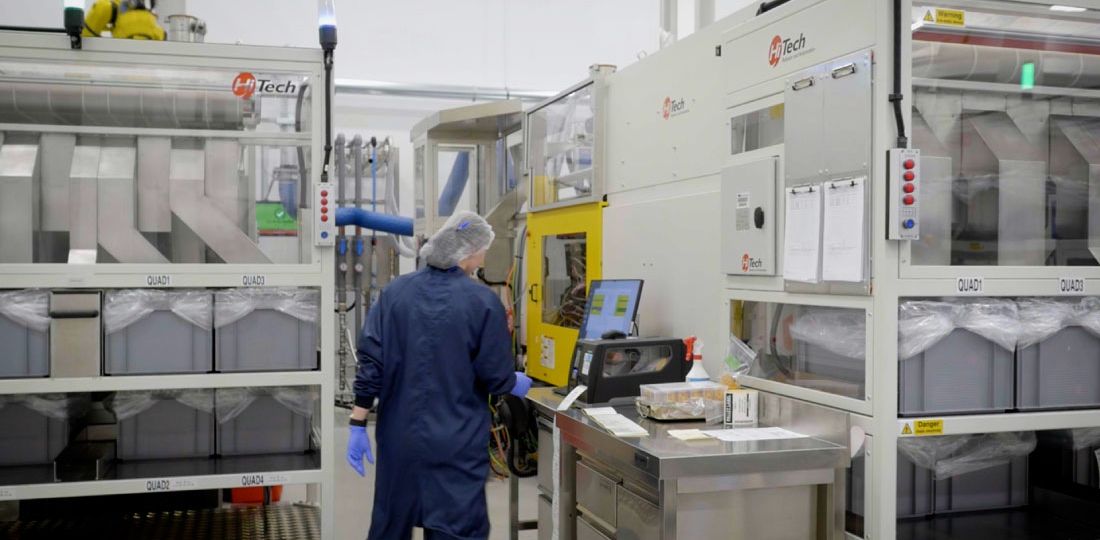
The cost of undertrained operators is one of the most underestimated risks in manufacturing and life sciences, showing up as a scrapped batch or a line stoppage, but rarely captured in full. This is Edition 1 of One Bad Shift, a six-part series putting a real number on workforce readiness failures. It starts where most training failures start, on the floor with one operator, on one shift.
A Typical Day…
It starts like any other shift.
A new operator, three weeks into their role, is assigned to a process they have been trained for. They watched the procedure. They sat with an experienced colleague for a day. They signed the training record. On paper, they are qualified.
Forty minutes into the shift, something goes wrong. A step is missed. A check is skipped — not deliberately, but because under the pressure of a live production environment, a procedure that was explained once and practised twice does not feel as solid as it did in the classroom. By the time the error is caught, the batch is compromised.
What happens next is familiar to every production leader in manufacturing and life sciences. The line stops. The deviation report is opened. The investigation begins. The CAPA process is triggered. And somewhere in a meeting room, someone is doing the maths on what this shift just cost.
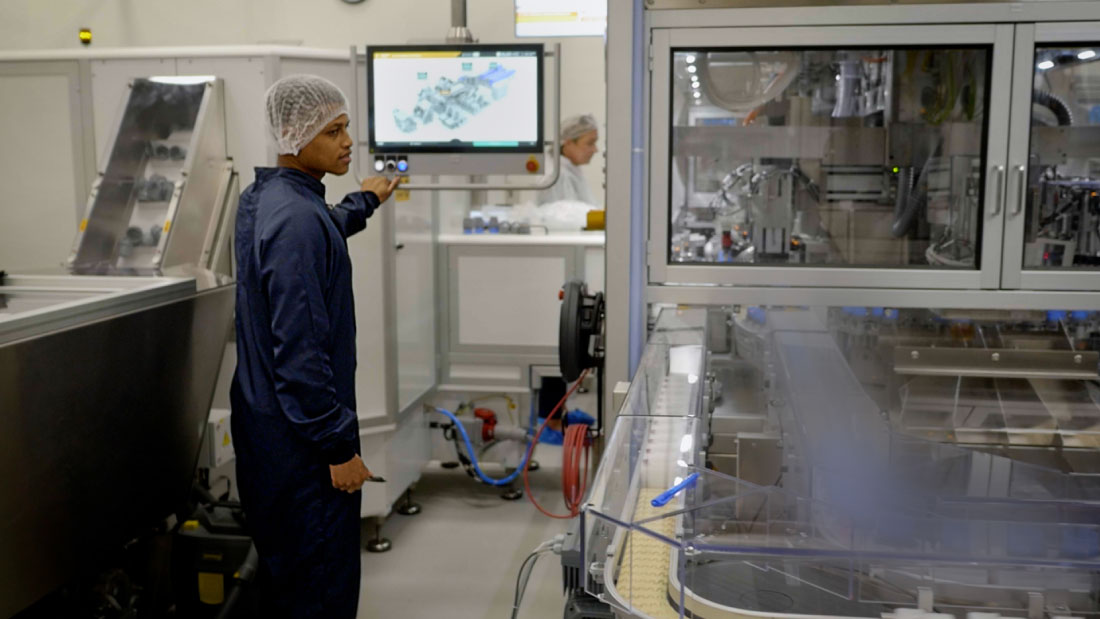
The visible cost everyone calculates
The immediate cost of a production error is the number that goes into the incident report. Scrapped materials. Lost batch value. Line downtime while the investigation runs. In medical device or biopharma manufacturing, where batch values can run to hundreds of thousands of euros and a single deviation can trigger a regulatory notification, that number can be significant on its own.
But it is rarely the whole picture. Industry data shows that human error accounts for around 23% of all unplanned downtime incidents in manufacturing — making undertrained operators one of the most preventable sources of production loss. And yet the costs that flow from a single training-related failure extend well beyond what appears in any incident report.
The cost of undertrained operators that don’t make it into the incident report
The true cost of a training-related production failure is distributed across the organisation in ways that are genuinely difficult to aggregate — which is precisely why most operations underestimate it.
A deviation in a regulated manufacturing environment does not close when the line restarts. It triggers a formal investigation that consumes quality engineering time, production management time, and often subject matter expert time. A moderate deviation investigation in a GMP-regulated facility can take anywhere from 20 to 80 hours of skilled labour to close properly — not including the CAPA that follows.
A Corrective and Preventive Action is not a form — it is a project. Identifying root cause, designing a corrective measure, implementing it, verifying its effectiveness, and closing it out can take weeks or months depending on the complexity of the finding. Each hour of CAPA work is an hour not spent on production, process improvement, or new product introduction.
In a medtech or biopharma environment, a training-related deviation that cannot be closed convincingly carries regulatory risk beyond the facility. A pattern of similar findings — even minor ones — can attract closer scrutiny from a notified body or regulatory agency. The cost of a warning letter, an import alert, or a production suspension dwarfs the cost of the batch that triggered the first incident.
A delayed batch means a delayed shipment. A delayed shipment means a conversation with a customer about why their order is late. In supply chains where on-time delivery performance is a contractual obligation, the commercial consequences of a production failure extend well beyond the factory floor.
After a training-related incident, the instinctive response is to increase supervision. Experienced operators are pulled from their own responsibilities to shadow new hires more closely. Subject matter experts spend time re-delivering training that was already delivered once. The people you can least afford to take off productive work are the ones absorbing the cost of a training system that didn’t hold.
The number most operations never calculate
Here is an exercise worth doing.
Take the last training-related deviation your facility experienced. Add up the following:
- Direct cost of scrapped materials or lost batch value
- Hours spent on deviation investigation, multiplied by the fully loaded hourly cost of the people involved
- Hours spent on CAPA development and implementation
- Hours of additional supervision provided by experienced operators in the weeks following the incident
- Any commercial impact from delayed delivery or customer communication
For most manufacturing and life sciences operations, the total is significantly higher than the number that appeared in the incident report. For facilities operating in regulated environments, where the investigation and CAPA process is non-negotiable, it is often an order of magnitude higher.
And this is the cost of one incident. On one shift. With one operator.
The systemic risk behind the single event
The cost of undertrained operators is rarely the result of a single bad hire or a single bad day. A training-related production failure is rarely a one-off — it is a symptom of a training model under pressure.
High operator turnover means there are always new starters moving through the onboarding pipeline. Tight production schedules mean experienced operators have limited time to supervise and instruct. Limited access to equipment during training means new hires practice on live processes before they are genuinely ready. And a training record that shows a procedure was explained and a form was signed is not the same as evidence that an operator can perform that procedure correctly under pressure.
The conditions that produced the incident you just calculated are still in place. Without a structural change to how your workforce is trained, the next incident is not a question of if — it is a question of when.
What leading manufacturers are doing differently
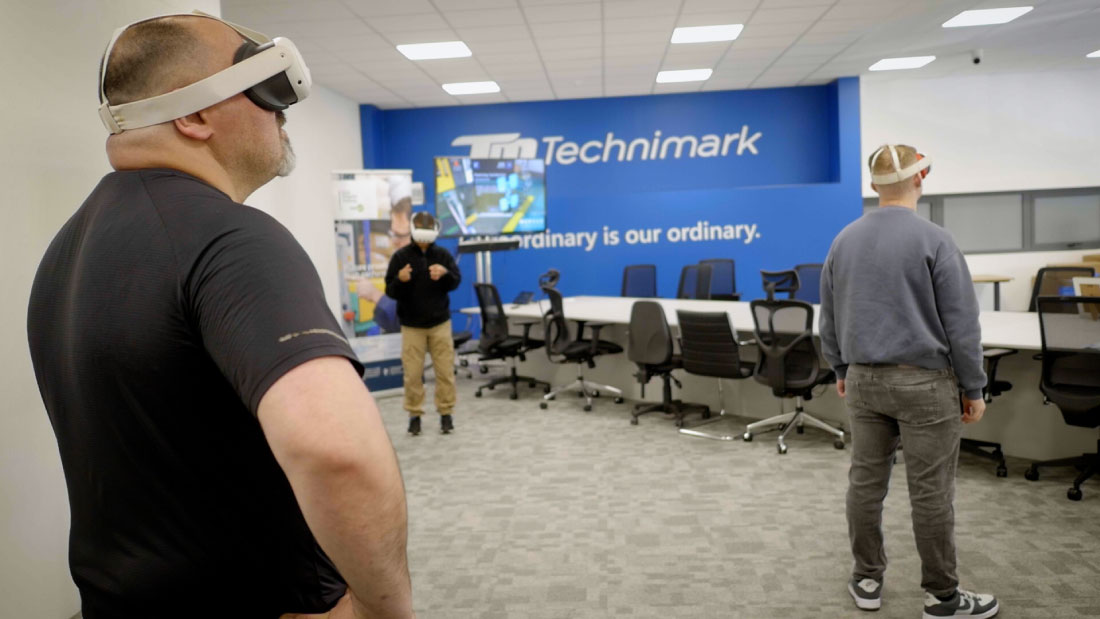
Reducing the cost of undertrained operators requires a structural change, not a policy update or an additional sign-off step. The organisations that have systematically reduced training-related production failures share a common characteristic: they have separated the learning environment from the production environment.
Instead of training new operators on live equipment that consumes production time, tying up experienced staff, and introducing risk at the very moment competence has not yet been established, they train in simulation first. Operators practice the procedure as many times as they need to reach genuine competence, in an environment where a missed step costs nothing and every repetition builds the muscle memory that holds under pressure.
By the time a simulated-trained operator encounters a live process for the first time, it is not actually the first time. They have done it dozens of times before. The confidence that it produces is measurable. The reduction in error rates that follows is measurable. And the training record that documents every session automatically, without a form to be signed, is the kind of evidence that holds up in an audit.
Boston Scientific completed over 16,000 line clearance training sessions using Avatar Academy, reducing training time from four to five weeks to a single day. Freudenberg Medical reduced their scrap rate by 50% and saw its expected VR training payback period drop from one year to a matter of months.
These are not outliers. They are what a training model built around competence rather than compliance delivers.
The question worth asking before the next shift
The batch failure we described at the start of this post is not an unusual event. For most manufacturing and life sciences operations, the cost of undertrained operators is an ongoing expense that are absorbed quietly, shift by shift, in deviation reports that get closed and training records that get signed without anyone calculating the full picture. Some version of it happens in manufacturing and life sciences facilities every day. Most of the time the cost is absorbed, the report is closed, and the same training model that produced the incident continues unchanged.
The question for a production or operations leader is not whether your current training model is good enough. It is whether the cost of the next incident and the one after that is something your operation can keep absorbing.
If the answer is no, the conversation about what to do differently is one worth starting now.